
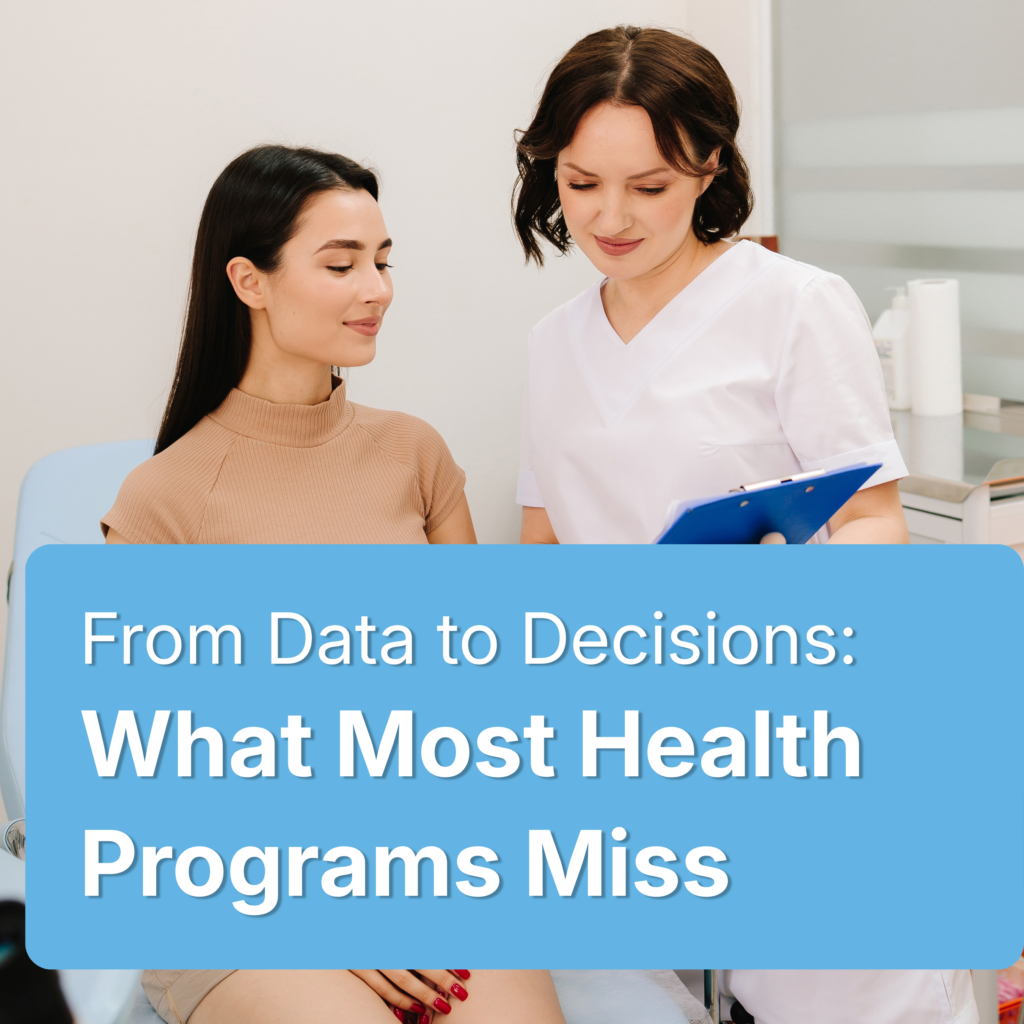
Health data has become ubiquitous. Patients can now track sleep, activity, heart rate variability, nutrition, and more with increasing precision. Laboratory testing has expanded, offering deeper insight into metabolic, hormonal, and inflammatory markers. Imaging provides detailed views of internal structure and function.
Yet many patients feel no closer to clarity. They accumulate information without gaining direction.
The issue does not stem from a lack of data; it stems from a lack of interpretation.
Most health programs emphasize collection. They generate reports, dashboards, and summaries that describe the body in detail, but they often stop there. Patients are left with numbers, but without a clear understanding of what those numbers mean or how they should respond.
This creates a gap between knowledge and action.
Data acquires meaning only when viewed in context. A single biomarker rarely tells a complete story. Its significance depends on how it interacts with other markers, how it trends over time, and how it aligns with the patient’s broader clinical picture. Without that context, even accurate data can lead to confusion or misplaced focus.
At Access Healthcare, we approach data differently. We treat it as the beginning of a clinical conversation, not the conclusion.
We analyze results through a physician-guided lens, identifying which findings carry the greatest relevance, which require immediate intervention, and which warrant observation. From there, we prioritize actions based on impact, not volume. We translate complex information into a structured plan that patients can understand and follow.
This process evolves continuously. As new data emerges, we refine the strategy, adjust interventions, and ensure that each decision reflects the patient’s current physiology rather than outdated assumptions.
This level of guidance transforms data into a tool for progress. It replaces uncertainty with clarity and allows patients to act with confidence rather than hesitation.
Longevity isn’t about how much data you collect; it’s about how you use it. The difference between knowing and improving lies in the decisions that follow.